Stanforth Butchers
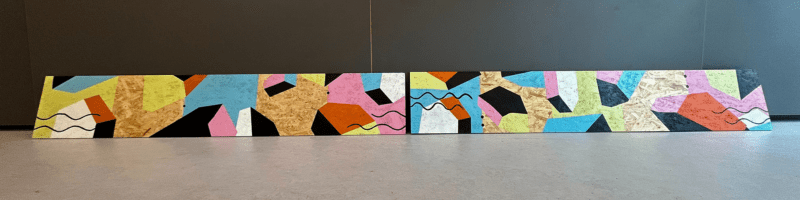
Inspiration for this mural was drawn from the history of one of the buildings on Mill Bridge where Stanforth’s Butchers and other buildings are now situated. According to the 1901 and 1911 census for 11 Mill Bridge, a map of 1852 shows a coal and timber yard to the rear of the building, next to the canal towpath; coal and timber would have been brought by barge in the early and mid-19th century, possibly as late as the early 20th century.
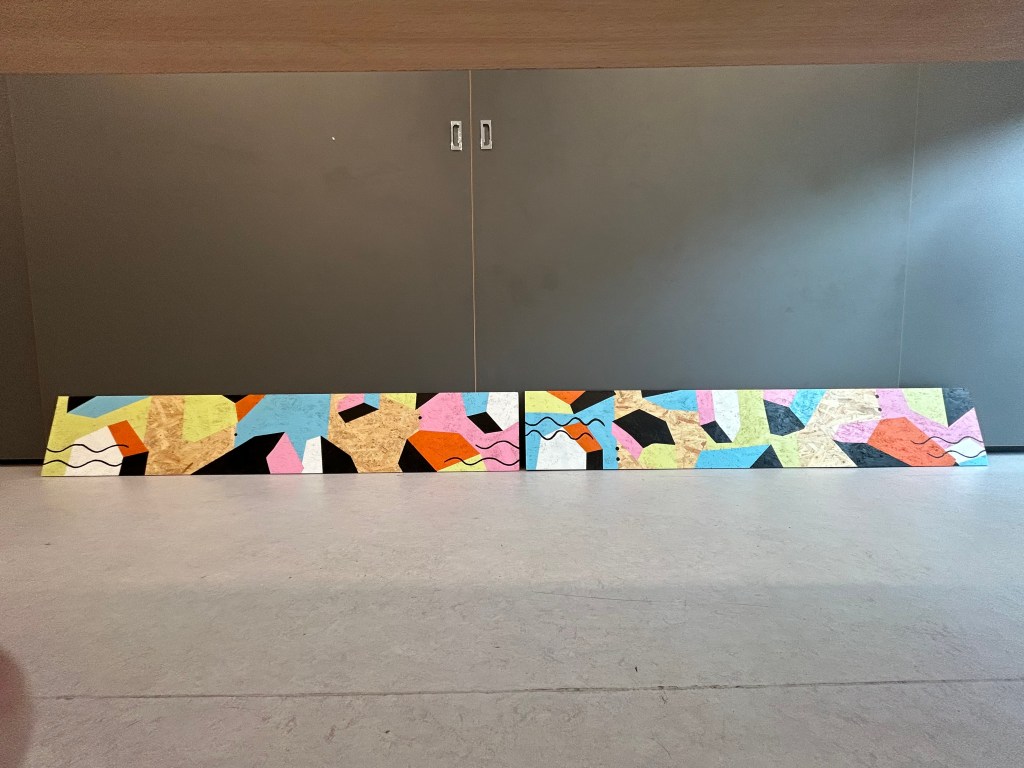
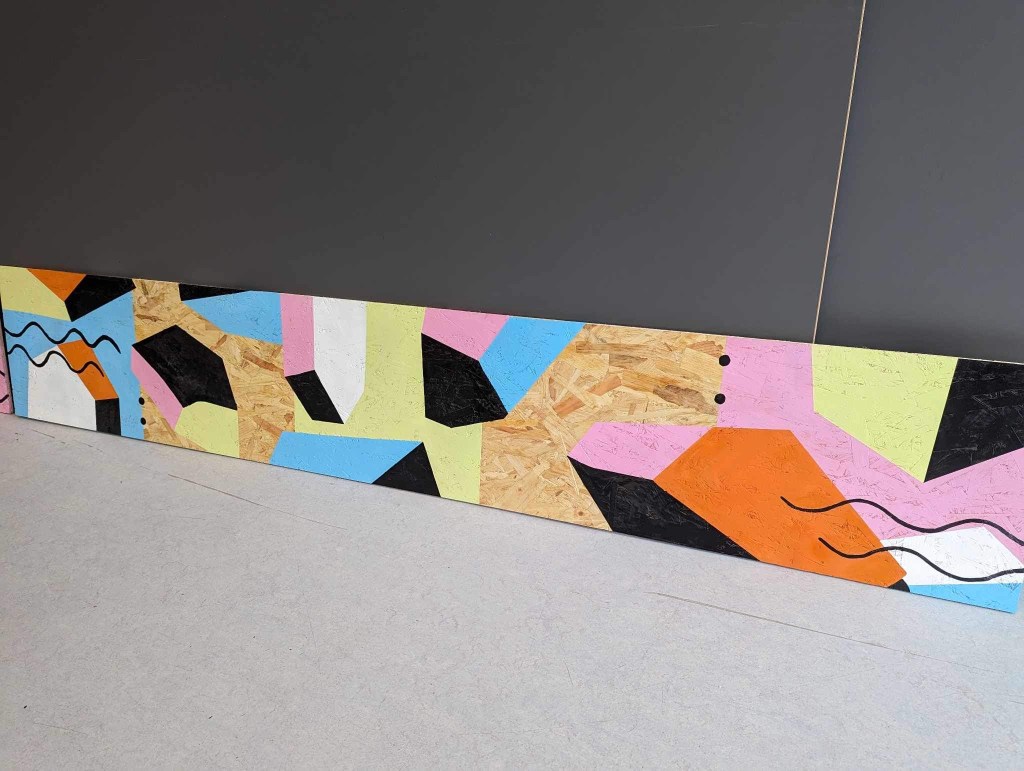
The shapes on the mural represent the coal being transported down the canal on the barges with the waves representing the flow of water which was so intrinsic in allowing them to keep transportation costs low.
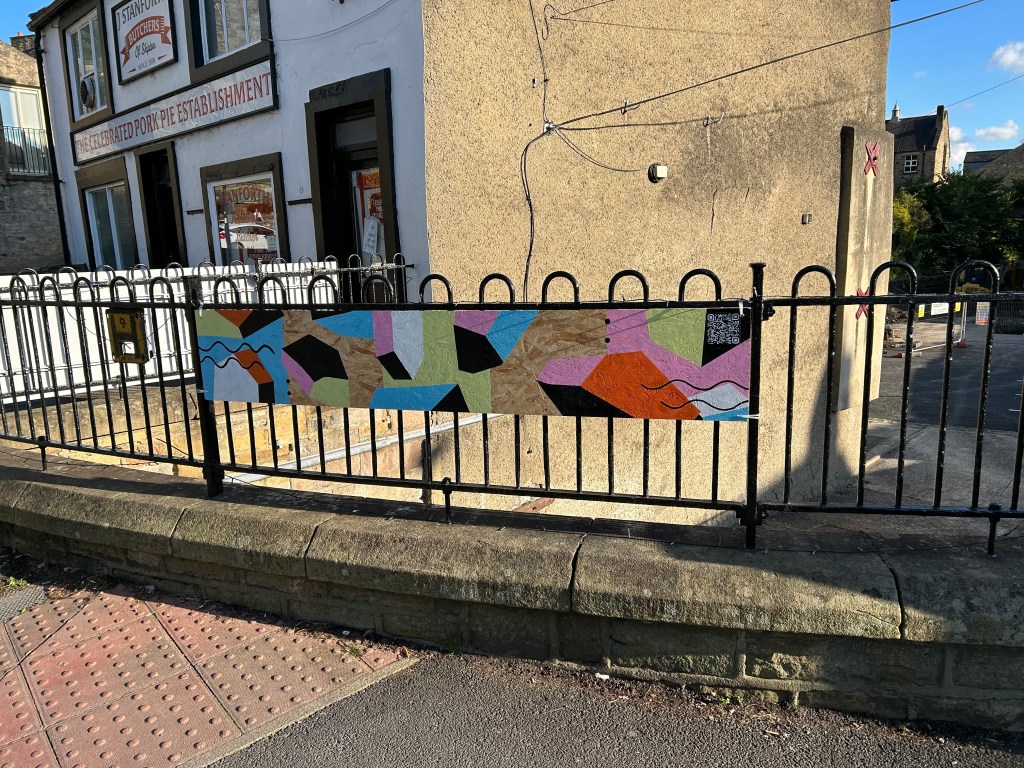
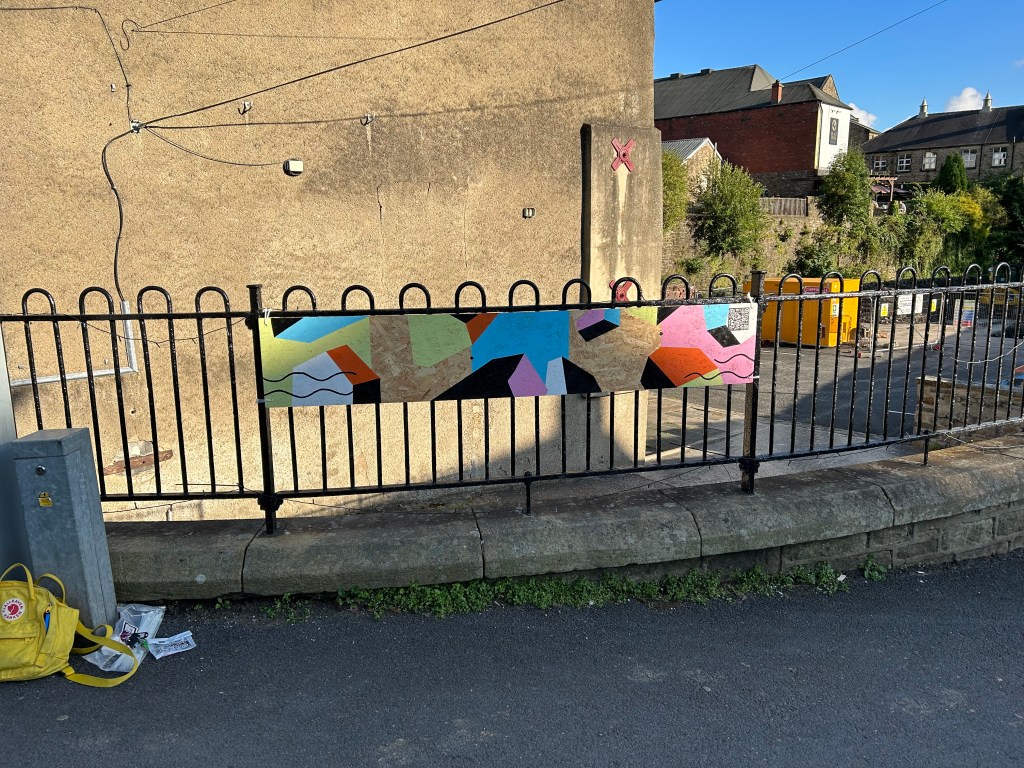
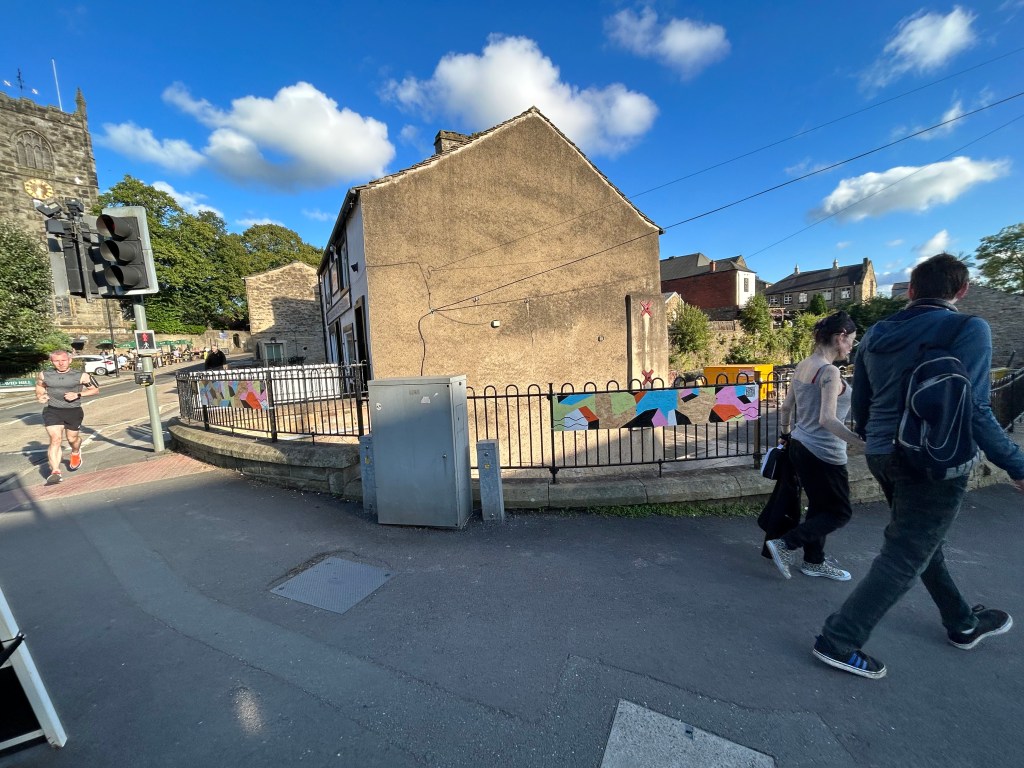
Stanforth’s building was most likely constructed between the 1770s, when Springs Branch of the Leeds & Liverpool Canal was built, and the 1820s, when Mill Bridge and Water Street were re-engineered by the Keighley and Kendal Turnpike Trust. This involved widening Mill Bridge, culverting Eller Beck, and raising the road surface of both Mill Bridge and Water Street. Maps, censuses and old photographs indicate that Stanforth’s building was part of a terrace of small cottages during the 19th century and early 20th century. An OS map of 1891 clearly shows four cottages. By 1949, the two cottages closest to Water Street (furthest from the canal) had been demolished.
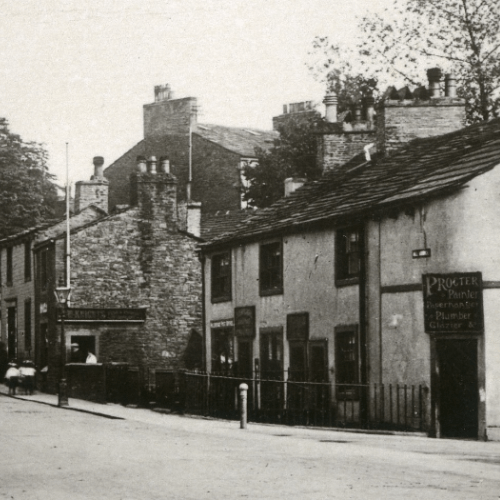
So far, we have found no information regarding the owners and occupiers of the property before the first census of 1841. Analysis of censuses, electoral registers and directories gives us a timeline of occupiers and activities associated with the building from 1841 until the present day. These are summarised below for each cottage, listing only the more long-lasting occupations. Addresses are those used in the late 19th century and first half of the 20th century – Nos. 9, 11, 13 and 15 Mill Bridge. Only Nos. 9 and 11 (the two closest to the canal) remained after demolition of Nos. 13 and 15.
Joiner/carpenter (1841, 1851, 1871, 1911 censuses) – construction and repairs in the mills, possibly also house building.
Cabinetmaker (1891, 1901 censuses) – domestic furniture for new houses (town expanding at this time).
Mill Bridge Post Office c. 1900 – c. 1950 – a small sub-post office which also a sold stationery and tobacco; probably became part of Stanforth’s premises after the post office closed c. 1950.
Grocer (1841, 1851, 1861, 1881, 1891 censuses) – selling fresh food and dried goods such as tea.
Clerk to wholesale coal agent (1901, 1911 censuses) – a map of 1852 shows a coal and timber yard to the rear of the building, next to the canal towpath; coal and timber would have been brought by barge in the early and mid-19th century, possibly as late as the early 20th century.
Draper (c. 1918 – c. 1930) – a dealer in cloth.
Stanforth, pork butcher (c. 1930 – present) – the founder James Stanforth was born in Danby, and his wife Eva in Glaisdale; both places are in the North York Moors. By 1911, James was a pork butcher in Skipton; at that time he was working for someone else and lived with Eva and their three young children at 11 Raikes Road.
Timber merchant (1841, 1851, 1861 censuses) – a map of 1852 shows a coal and timber yard to the rear of the building, next to the canal towpath; coal and timber would have been brought by barge during this period.
Bread maker (1881, 1901 censuses)
 Fresh Perspective: Community in Colour